Peptides vs. Steroids: What’s The Difference?
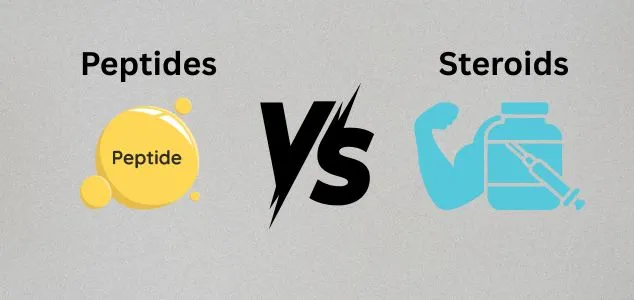
When it comes to fitness and performance enhancement, few topics generate as much confusion—and heated debate—as the distinction between peptides and steroids. Both are performance-enhancing compounds used by athletes and fitness enthusiasts, yet they work through entirely different mechanisms, carry different risk profiles, and have vastly different legal and ethical implications.
But what is the difference between the two and how does that help you when considering either option?
What Are Steroids?
Anabolic-androgenic steroids (AAS) are synthetic derivatives of testosterone, the primary male sex hormone. When people talk about “steroids” in a fitness context, they’re typically referring to these synthetic hormones designed to promote muscle growth and athletic performance.
Common anabolic steroids include testosterone, nandrolone (Deca-Durabolin), trenbolone, and oxandrolone (Anavar).
How Steroids Work
Steroids function as hormonal agents. When you take an anabolic steroid, it:
- Increases protein synthesis, driving rapid muscle growth
- Enhances nitrogen retention in muscles
- Boosts red blood cell production, improving oxygen delivery
- Increases overall strength and power output
Essentially, steroids flood your system with hormones that amplify muscle-building processes throughout your entire body. The effects are powerful and noticeable—often within weeks.
What Are Peptides?
As discussed earlier, peptides are short chains of amino acids that work as targeted biological messengers. Rather than broadly elevating hormonal levels like steroids do, peptides trigger specific, localised responses in your body.
For example, growth hormone-releasing peptides (GHRPs) stimulate your pituitary gland to produce more of your body’s own growth hormone—they don’t introduce external hormones. This is a fundamentally different mechanism.
Key Differences Explained
Mechanism of Action
- Steroids work by replacing or supplementing your body’s natural hormones with synthetic versions. They essentially override your body’s hormonal regulation system.
- Peptides work by signalling your body to produce more of its own natural hormones and enzymes. They enhance and amplify what your body already does naturally.
This distinction is profound. Steroids are a top-down approach (adding external hormones), while peptides are a bottom-up approach (stimulating natural production).
Specificity and Precision
- Steroids affect multiple systems simultaneously. When you introduce high doses of testosterone or its derivatives, it doesn’t just target muscle growth. It affects your prostate, cardiovascular system, liver, mood, sexual function, and more. This broad-spectrum action makes side effects difficult to avoid.
- Peptides can be highly specific. A particular peptide might stimulate growth hormone production without significantly affecting other hormonal systems. Different peptides target different pathways, allowing for more targeted intervention.
Speed of Results
- Steroids produce rapid, dramatic results. Users often report noticeable muscle gains within 2-4 weeks. The effects are powerful and obvious.
- Peptides typically produce more gradual, sustainable results. Changes become apparent over weeks to months. The approach is more subtle and sustainable.
Side Effect Profiles
This is where the differences become critically important.
Steroid Side Effects can be severe:
- Hormonal shutdown (your body stops producing testosterone naturally)
- Gynecomastia (enlargement of breast tissue in men)
- Acne and skin issues
- Hair loss
- Liver strain and damage
- Cardiovascular complications (blood clots, hypertension, increased heart attack risk)
- Mood swings, aggression, and psychological effects
- Testicular atrophy
- Infertility concerns
- Addiction potential
Many steroid side effects are permanent or long-lasting, even after discontinuing use.
Peptide Side Effects are generally minimal:
- Occasional injection site reactions (redness, swelling)
- Brief headaches or dizziness with certain peptides
- Generally well-tolerated with minimal systemic effects
Because peptides work with your body’s natural mechanisms rather than overwhelming them, they’re inherently better tolerated.
Hormonal System Impact
Steroids suppress your natural hormone production. Your body, sensing abundant external hormones, downregulates its own production. This is called “hormonal shutdown.” When you stop taking steroids, your natural hormone production doesn’t immediately resume—it can take weeks or months to recover, and full recovery isn’t guaranteed. Some users experience permanent hormonal disruption.
Peptides work with your endocrine system rather than against it. They stimulate natural production, and when you discontinue peptides, your body simply returns to its baseline hormone production. No shutdown, no recovery period.
Legal Status
- Steroids are controlled substances in most countries. They’re classified as Schedule III controlled drugs in the United States and many other countries. Possession without a prescription is illegal. The black market for steroids is massive, which means quality control is questionable and the risk of contaminated or counterfeit products is significant.
- Peptides occupy a more ambiguous legal space. The regulatory status varies by jurisdiction and specific peptide. In many places, research-grade peptides exist in a gray area. However, this is rapidly evolving as regulatory bodies catch up with the technology.
Long-Term Health Impact
- Steroids carry documented risks for long-term health complications, including cardiovascular disease, liver damage, and permanent endocrine dysfunction. The long-term health cost of steroid use is well-established.
- Peptides have a much more favorable long-term safety profile. Because they work with your body’s natural systems, long-term complications are rare when used appropriately.
Recovery and Sustainability
- Steroids create dramatic results but require post-cycle therapy (PCT) to attempt recovery of natural hormone production. Many gains are lost post-cycle, requiring ongoing use to maintain results. This creates a cycle of dependency.
- Peptides produce more sustainable, lasting results because they don’t suppress your natural system. Gains made through peptide therapy tend to be more durable long-term.
The Honest Comparison
If your goal is maximum muscle growth in the shortest possible timeframe, steroids will outperform peptides. The results are dramatic and fast.
However, this comes at a significant cost to your health, hormonal system, and long-term well-being.
If your goal is sustainable performance enhancement with minimal health risk, peptides represent a far superior option. The results are more modest and gradual, but they’re built on a foundation of supporting your body’s natural processes rather than overwhelming them when training for sport, combat sports likemuay thaiand boxing orweight lifting.
A Third Option: Optimised Lifestyle
It’s worth noting that proper training, nutrition, sleep, and stress management can produce remarkable results without any pharmaceutical intervention. Many people pursuing steroids or peptides would achieve 80% of those results through disciplined lifestyle optimisation alone.
Disclaimer: This content is for educational purposes only and should not be construed as medical advice or encouragement to use controlled substances. Anabolic steroids are Schedule III controlled drugs in the United States and many other countries. Always consult with qualified healthcare professionals before pursuing any performance enhancement protocol. The information provided represents general educational content and does not substitute for professional medical guidance.
Also Read: Caquis Persimon: The Ancient Fruit Reborn as a Modern Superfood Powerhouse