Understanding Mannacote (Manicotti) in Italian-American Cooking
The word mannacote (Manicotti) is commonly encountered in informal culinary discussions, particularly within Italian-American food culture. While it is not an officially recognized Italian culinary term, it functions as a phonetic or colloquial reference tied closely to traditional stuffed pasta dishes. Its usage reflects spoken language rather than formal gastronomy, making it an example of how food terminology evolves within communities.
Understanding this term requires a cultural rather than a dictionary-based approach. It exists because families pass down recipes orally, adapting pronunciation over time. As a result, the word has become associated with a specific type of comfort food rather than a strict technical definition.
Linguistic Background and Cultural Context
The emergence of mannacote can be traced to immigrant communities where Italian dialects merged with English pronunciation patterns. In these settings, culinary terms were often altered phonetically while retaining their original meaning. This process was especially common in Italian-American households where regional accents shaped spoken language.
Rather than representing a separate dish, the term reflects familiarity and tradition. It illustrates how food language can prioritize shared understanding over linguistic accuracy, particularly in informal or domestic environments.
Relationship to Manicotti
Culinarily, mannacote is most often associated with manicotti, a well-established pasta dish in Italian-American cuisine. Manicotti is the plural form of manicotto, derived from manica, meaning “sleeve,” combined with an augmentative ending. This name accurately describes the pasta’s large tubular shape.
These tubes are designed to be stuffed and baked, making them ideal for rich fillings and sauces. While the spelling and pronunciation differ, the preparation method and presentation remain consistent with traditional manicotti dishes.
Pasta Shape and Structural Design
The defining characteristic of manicotti-style pasta is its size and structure. Large tubes allow for generous fillings, which is central to the dish’s appeal. When people refer to mannacote, they are typically referencing this same structural form rather than a different pasta variety.
The rigidity of the pasta after baking ensures that the filling remains intact, creating a balanced bite. This functional design has contributed to the dish’s longevity in home cooking and celebratory meals.
Traditional Fillings and Ingredients
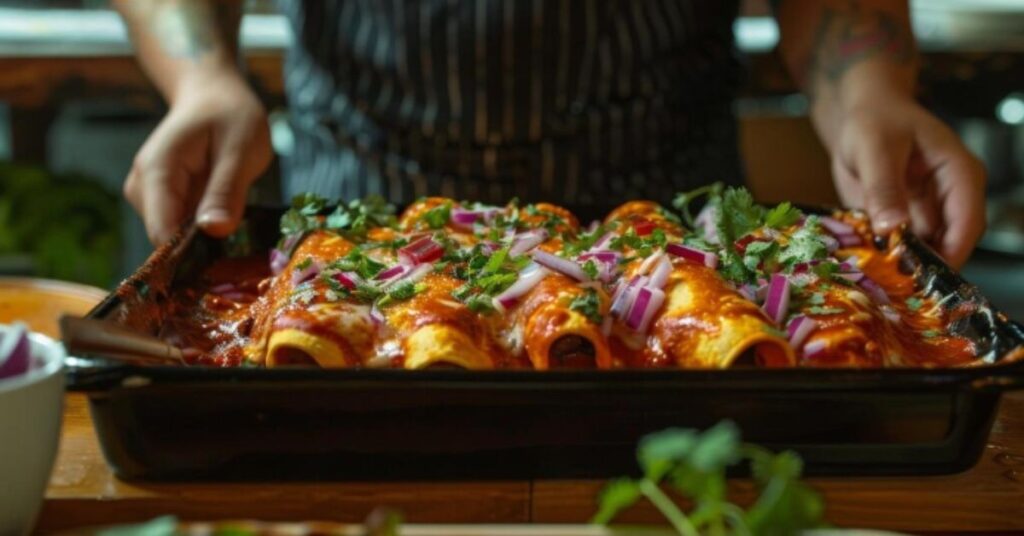
Classic manicotti fillings are centered on ricotta cheese mixed with chopped parsley. This combination provides a mild, creamy interior that complements the pasta’s texture. In some variations, ground meat such as veal is added, enhancing richness while maintaining balance.
When pasta sheets are used instead of tubes and filled strictly with meat, the dish is more accurately identified as cannelloni. This distinction is important for culinary accuracy, even though casual usage may blur the lines.
Sauce and Baking Method
A tomato-based sauce is traditionally used to top stuffed pasta dishes associated with mannacote. The acidity of the sauce offsets the richness of the cheese filling, while baking allows flavors to meld evenly throughout the dish.
The baking process also softens the pasta while slightly crisping exposed edges, creating textural contrast. This method is integral to the identity of the dish and distinguishes it from boiled or pan-finished pasta preparations.
Italian vs Italian-American Interpretations
In Italy, manicotti as known in the United States is far less common. Italian cuisine often favors fresh pasta sheets for stuffed preparations, whereas Italian-American cooking popularized the use of dried tubular pasta. The term mannacote belongs firmly within this Italian-American adaptation.
This evolution reflects availability of ingredients and the need for practicality in immigrant kitchens. Over time, these adaptations became traditions in their own right rather than deviations from Italian norms.
Role in Home Cooking and Celebrations
Stuffed pasta dishes associated with mannacote frequently appear at family gatherings, holidays, and communal meals. Their preparation is often time-intensive, which contributes to their association with special occasions rather than everyday cooking.
The dish’s ability to be prepared in advance and baked when needed also adds to its practicality. These qualities have helped secure its place in long-standing family traditions.
Common Misconceptions
A common misconception is that mannacote refers to a unique pasta type. In reality, it is better understood as a spoken variation linked to manicotti. Recognizing this distinction helps maintain clarity when discussing recipes or culinary history.
Another misunderstanding involves confusing manicotti with cannelloni. While similar in appearance, differences in pasta form and filling style distinguish the two dishes in classical culinary terms.
Key Culinary Points at a Glance
| Aspect | Description |
|---|---|
| Pasta Type | Large tubular pasta |
| Culinary Origin | Italian-American cuisine |
| Typical Filling | Ricotta, parsley, optional ground meat |
| Sauce | Tomato-based |
| Cooking Method | Stuffed and baked |
| Related Dish | Cannelloni (distinct preparation) |
| Usage of Term | Informal, spoken variation |
Contemporary Relevance
Today, mannacote continues to appear in food blogs, recipe discussions, and informal culinary writing. Its persistence highlights how food language evolves independently of formal culinary classification.
Rather than being replaced, such terms coexist with standardized names, enriching food culture by preserving its human and historical dimensions.
Conclusion
The word mannacote represents more than a variation in spelling or pronunciation. It reflects the lived experience of Italian-American cooking, where language, tradition, and food intersect. Rooted in manicotti preparation, the term survives through oral tradition rather than formal recognition.
By understanding its cultural and culinary context, readers can appreciate the dish accurately while recognizing the role of language in shaping food identity. This perspective preserves authenticity without sacrificing clarity.
FAQs
1. Is mannacote an official Italian pasta name?
No, it is an informal, phonetic variation.
2. What dish does it usually refer to?
It commonly refers to manicotti.
3. What filling is traditional?
Ricotta cheese with parsley, sometimes with ground meat.
4. How is it different from cannelloni?
Cannelloni often uses pasta sheets and meat-based fillings.
5. Is it served with a specific sauce?
Yes, typically with tomato sauce.