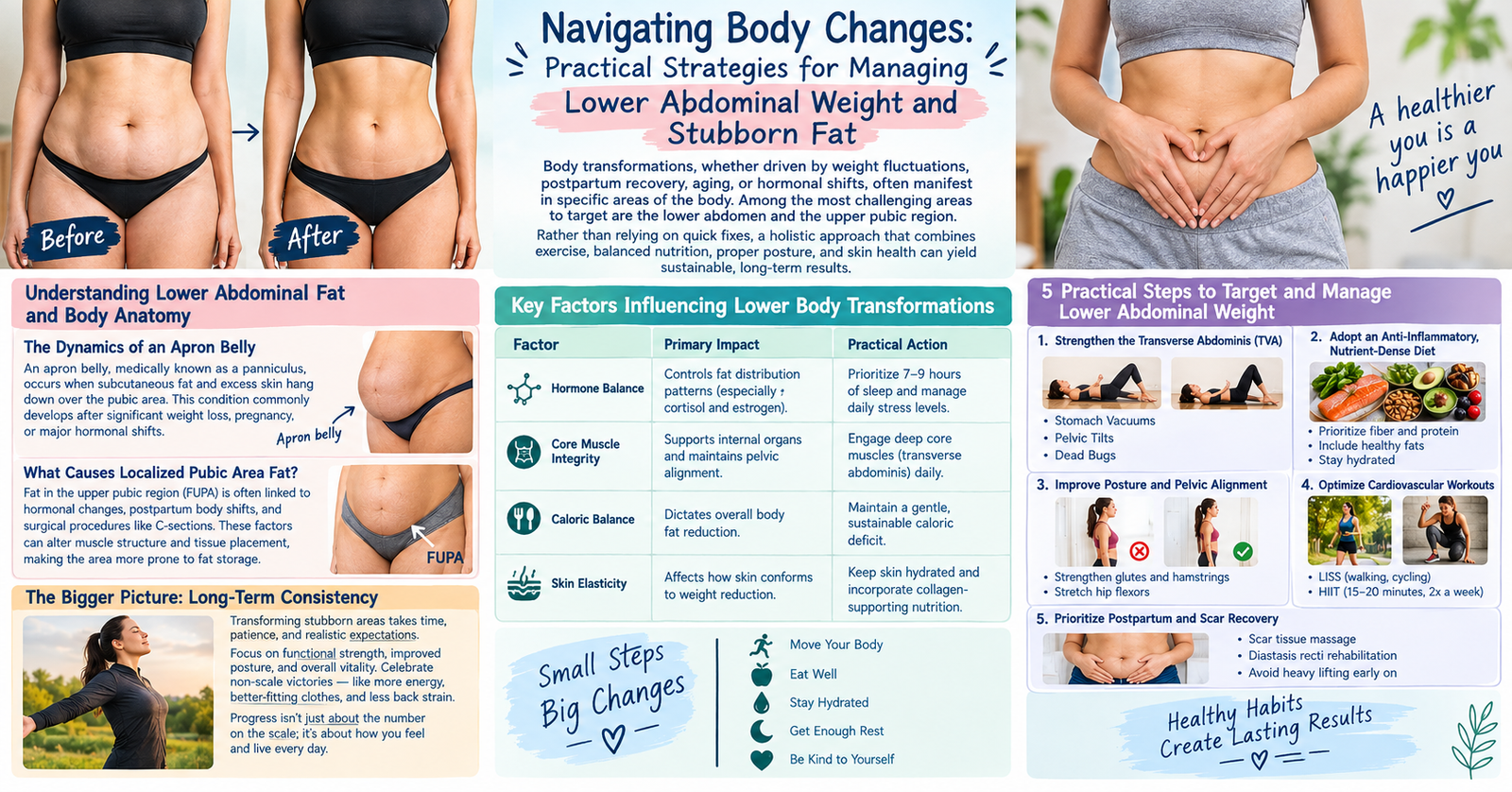
Navigating Body Changes: Practical Strategies for Managing Lower Abdominal Weight and Stubborn Fat
Body transformations, whether driven by weight fluctuations, postpartum recovery, aging, or hormonal shifts, often manifest in specific areas of the body. Among the most challenging areas to target are the lower abdomen and the upper pubic region. Many individuals working on their fitness journeys encounter localized fat deposits—commonly referred to as an “apron belly” or a “FUPA” (Fat Upper Pubic Area)—that seem resistant to standard diet and exercise routines.
Understanding the underlying causes of these body changes is the first step toward effective management. Rather than relying on quick fixes or extreme measures, adopting a holistic approach that combines targeted exercise, balanced nutrition, proper posture, and skin health can yield sustainable, long-term results.
Understanding Lower Abdominal Fat and Body Anatomy
To effectively address stubborn lower body weight, it is essential to understand why the body stores fat in these specific regions. Fat distribution is heavily influenced by genetics, hormone balance, age, and individual metabolic rates.
The Dynamics of an Apron Belly
An apron belly, medically known as a panniculus, occurs when subcutaneous fat and excess skin hang down over the pubic area. This condition commonly develops following significant weight loss, pregnancy (specifically after a C-section), or major hormonal shifts.
- Subcutaneous vs. Visceral Fat: While visceral fat wraps around internal organs, the weight that forms an apron belly consists primarily of subcutaneous fat located directly beneath the skin.
- Skin Elasticity: Rapid weight loss or stretching during pregnancy can weaken collagen and elastin fibers in the dermis, making it difficult for the skin to snap back naturally.
- Management Focus: Managing this area requires a combination of core stabilization, skin barrier hygiene, and gradual, progressive body re-composition. For detailed insights on handling these specific body changes, exploring dedicated health resources like Apron Belly can provide valuable guidance on targeted fitness and wellness strategies.
What Causes Localized Pubic Area Fat?
Directly below the lower abdomen lies the upper pubic region, where fat deposits can accumulate into what is commonly termed a FUPA. Unlike general abdominal fat, fat in this area is heavily tied to specific physiological triggers:
- Hormonal Influence: Estrogen fluctuations during puberty, pregnancy, or menopause can direct fat storage toward the pelvic and lower abdominal regions.
- Postpartum Anatomy: During pregnancy, the abdominal muscles (rectus abdominis) stretch and sometimes separate—a condition known as diastasis recti. This separation alters internal support, allowing the lower core and pubic region to tilt forward.
- Surgical Tissue Shifts: Surgical procedures in the pelvic area, such as Cesarean sections, can create scar tissue that tethers deeper tissue layers, causing surrounding fat to sit more prominently. Dedicated wellness sites likeFUPA offer focused advice on post-pregnancy recovery, exercise modifications, and non-invasive methods to address pubic area fat.
Key Factors Influencing Lower Body Transformations
Achieving progress in stubborn areas requires addressing the root factors that contribute to localized fat storage.
| Factor | Primary Impact | Practical Action |
| Hormone Balance | Controls fat distribution patterns (especially cortisol and estrogen) | Prioritize 7-9 hours of sleep and manage daily stress levels. |
| Core Muscle Integrity | Supports internal organs and maintains pelvic alignment | Engage deep core muscles (transverse abdominis) daily. |
| Caloric Balance | Dictates overall body fat reduction | Maintain a gentle, sustainable caloric deficit. |
| Skin Elasticity | Affects how skin conforms to weight reduction | Keep skin hydrated and incorporate collagen-supporting nutrition. |
5 Practical Steps to Target and Manage Lower Abdominal Weight
While spot reduction (losing fat from only one specific spot) is a biological myth, targeted strategies can tone the underlying musculature, improve posture, and promote overall fat loss across the entire body.
1. Strengthen the Transverse Abdominis (TVA)
Traditional sit-ups and crunches target the outer rectus abdominis muscles, which can sometimes push the lower abdomen outward if the deep core is weak. Instead, focus on exercises that engage the transverse abdominis—the body’s natural inner corset.
- Stomach Vacuums: Exhale all air from your lungs, pull your belly button toward your spine, and hold for 10–15 seconds. Repeat for 3–5 sets.
- Pelvic Tilts: Lie flat on your back with knees bent. Gently flatten your lower back against the floor by tightening your lower abs.
- Dead Bugs: Keep your lower back grounded while extending opposite arm and leg movements controlledly.
2. Adopt an Anti-Inflammatory, Nutrient-Dense Diet
Systemic inflammation can increase cortisol levels, which encourages the body to store fat in the midsection and lower pelvis.
- Prioritize Fiber and Protein: Adequate protein supports lean muscle preservation, while soluble fiber helps regulate blood sugar spikes.
- Incorporate Healthy Fats: Omega-3 fatty acids found in salmon, walnuts, and flaxseeds help combat cellular inflammation.
- Hydrate Consistently: Drinking sufficient water improves skin elasticity and aids digestive processing, reducing lower abdominal bloating.
3. Improve Posture and Pelvic Alignment
An anterior pelvic tilt—where the pelvis tilts forward, arching the lower back—causes the stomach and pubic region to protrude outward, making localized fat appear more pronounced.
- Strengthen Glutes and Hamstrings: Weak posterior muscles fail to hold the pelvis in a neutral position.
- Stretch Hip Flexors: Tight hip flexors from prolonged sitting pull the pelvis forward. Daily hip stretches can instantly improve the appearance of the lower belly.
4. Optimize Cardiovascular Workouts
To burn overall body fat, combine low-intensity steady-state (LISS) cardio with high-intensity interval training (HIIT).
- LISS (Walking, Cycling): Walking at a steady pace burns fat efficiently without spiking cortisol levels, making it ideal for daily activity.
- HIIT (Short Bursts): Incorporating 15–20 minutes of interval training twice a week elevates post-exercise oxygen consumption (EPOC), boosting calorie burn throughout the day.
5. Prioritize Postpartum and Scar Recovery
For mothers recovering from childbirth or individuals with surgical scars, tissue mobility is critical.
- Scar Tissue Massage: Once fully healed, gentle massage around surgical scars helps break down adhesions, allowing skin and subcutaneous tissue to sit smoothly.
- Diastasis Recti Rehabilitation: Avoid heavy lifting or traditional crunches until deep abdominal separation has been rehabilitated using gentle, stabilizing exercises.
Maintaining Long-Term Consistency and Body Positivity
Transforming stubborn lower body areas takes time, patience, and realistic expectations. Localized fat reserves are often the last to leave during a weight loss journey.
Focusing on functional strength, improved posture, and overall vitality ensures that health benefits build over time. Celebrating non-scale victories—such as increased stamina, better-fitting clothing, and reduced lower back strain—will keep you motivated as your body gradually changes.
Also Read: Runlia Revealed: Unveiling the Powerful Ecosystem Redefining Modern Wellness